Claude Partner

Claude AI, built into Salesforce and your full stack

We use Claude, Anthropic's AI, across two things we know well: Salesforce implementations and full-stack product engineering. That means Claude doesn't sit next to your CRM as a bolted-on chatbot — it's wired into your Salesforce data model on one side, and into the enterprise agents and applications our team builds on the other.

SALESFORCEFULL-STACKCLAUDE

The Partnership

We're a Claude partner. In practice, that means our engineers have production experience with Claude's API, our Salesforce team has shipped Agentforce 360 agents grounded in Claude, and our full-stack team uses Claude Code and the Claude Agent SDK as part of how we design, build, and ship enterprise software. We didn't add AI to our service list — we changed how we deliver Salesforce and full-stack work.
Anthropic and Salesforce partnership
What we build

Two paths. Same model. Production outcomes.

Salesforce and full-stack — two parallel journeys, both grounded in Claude from foundation to ship.

Salesforce

Inside Agentforce, Data 360, and your org.

6 capabilities
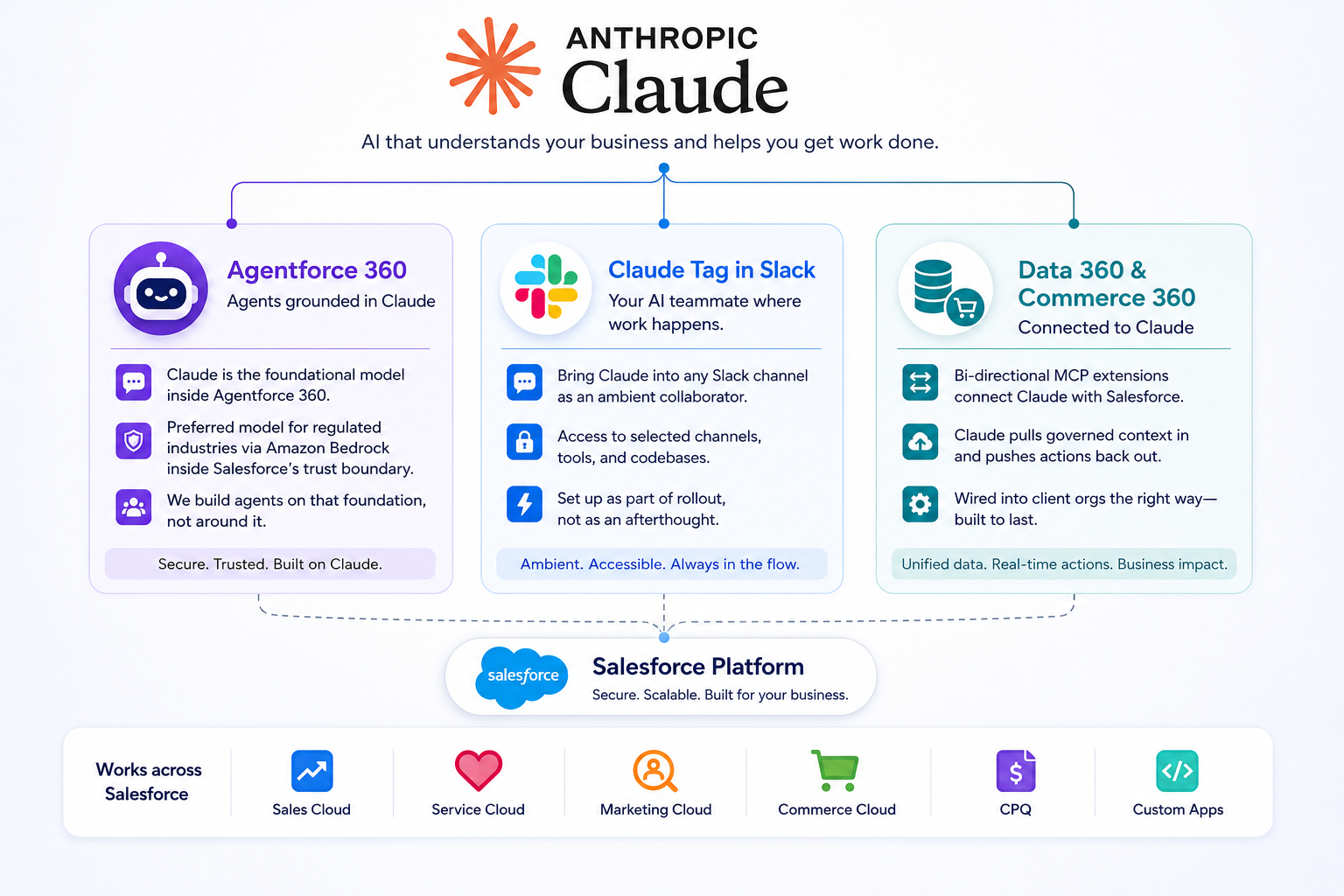
Claude inside Salesforce — Agentforce, Data 360, and Slack

Agentforce 360 agents grounded in Claude

Claude became the foundational model inside Salesforce's Agentforce 360 platform, and the preferred model for regulated industries running through Amazon Bedrock inside Salesforce's own trust boundary. We build agents on that foundation, not around it.
Data 360 and Commerce 360, connected to Claude

Salesforce has extended Agentforce 360 with bi-directional MCP extensions, letting Claude pull governed Salesforce context in and push actions back out through Agentforce as the execution layer. We wire this into client orgs rather than building one-off integrations that break on the next release.

Claude Tag in Slack

Salesforce and Anthropic shipped Claude Tag, letting teams bring Claude into any Slack channel as an ambient collaborator with access to selected channels, tools, and codebases. We set this up as part of rollout, not as an afterthought.

Apex and LWC development, AI-reviewed

Claude Code sits in our Salesforce dev pipeline for code review, test generation, and catching regressions before QA.

Legacy org modernization

Claude helps us map undocumented Apex, flows, and validation rules during migrations — the unglamorous work that usually eats a project's timeline.

CPQ to Revenue Cloud transitions

With Salesforce CPQ in end-of-sale and maintenance mode — and Salesforce investment redirected to Agentforce Revenue Management — we use Claude to audit existing CPQ logic and translate it into Revenue Management configurations.

Full-Stack

Enterprise agents, cloud deployment, and product engineering.

6 capabilities
Claude across full-stack engineering and enterprise agents

Enterprise AI agents, built end to end

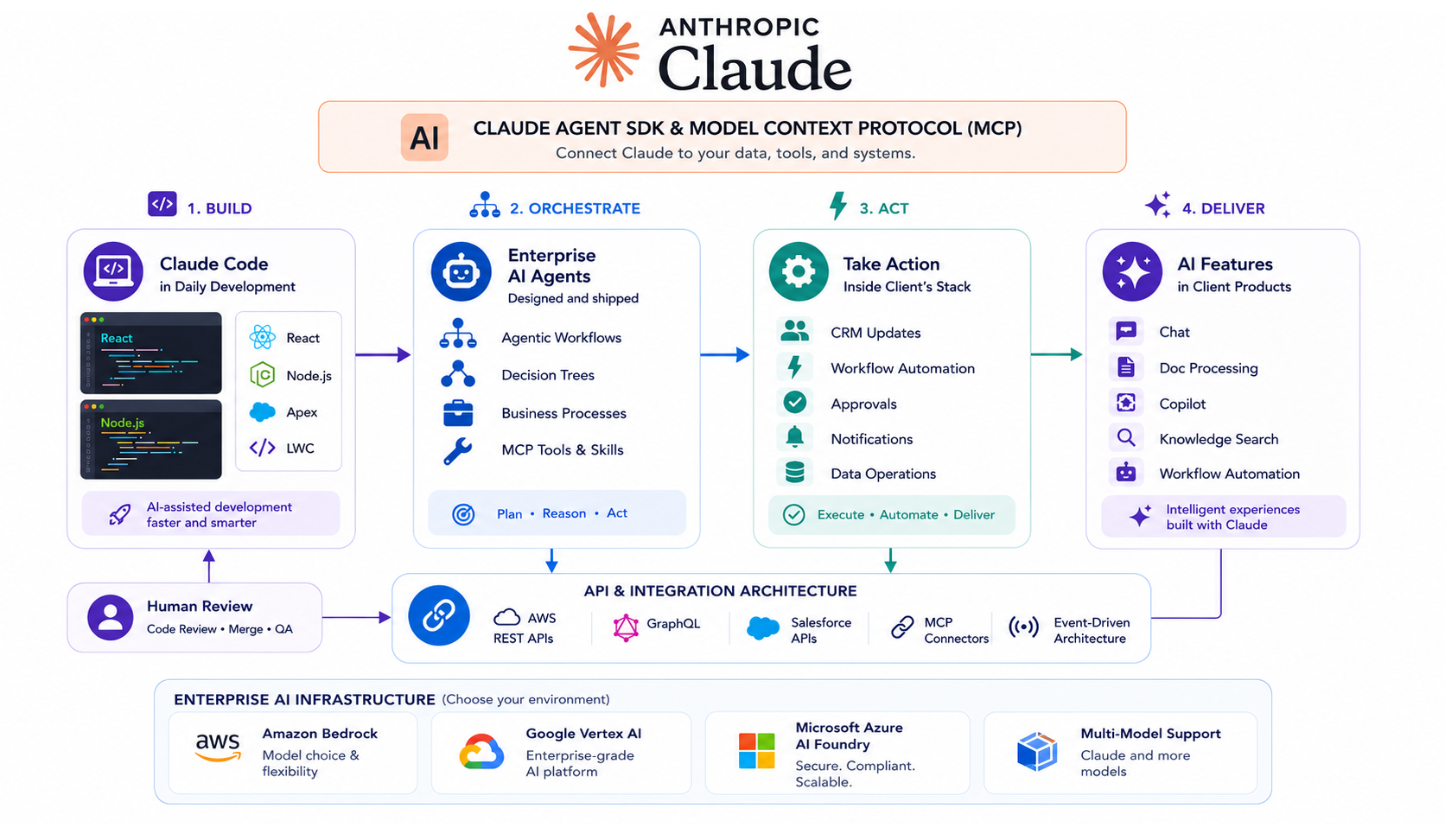
This is where a lot of our full-stack work has moved. We design and ship production agents using the Claude Agent SDK and Model Context Protocol, the same open standard Anthropic released that now connects agents to tools, data, and internal systems across the industry. That means agents that can actually take action inside a client's stack, not just answer questions about it.

Claude across cloud platforms, not locked to one

We deploy Claude wherever a client's infrastructure already lives: Amazon Bedrock, Google Cloud Vertex AI, or Microsoft Foundry. That flexibility matters more than it sounds — it means we're not asking a client to restructure their cloud setup just to adopt Claude.

Claude Code in daily development

Our engineers use Claude Code for scaffolding, refactors, and code review across React and Node projects, with a human reviewing every merge.

Tool use and agentic workflows

Claude's tool-use capability is what turns a chatbot into something that reasons over enterprise data and acts inside real business processes. We build on this directly rather than simulating it with brittle prompt chains.

API and integration architecture

We design and document the integration layer between Salesforce, internal systems, and the Claude API — the connective tissue most projects underestimate.

AI features built into client products

When a client wants an AI feature in their own product, not just internally, we build it on the Claude API directly: chat interfaces, document processing, internal copilots.

Why Claude

Three reasons this is the model we standardized on

Enterprise delivery needs more than a capable model — it needs governance, flexibility, and a platform that scales across use cases.

  • Built for CRM-heavy, regulated work

    Most of our clients live in Salesforce with real compliance constraints. Claude's availability through governed platforms like Amazon Bedrock fits that without extra workarounds.

  • One model family, different jobs

    We use lighter, faster Claude models for high-volume automation and larger models for harder reasoning — same platform, no re-architecting between use cases.

  • Cloud-agnostic by design

    Claude runs on Bedrock, Vertex AI, or Microsoft Foundry, so we deploy it inside whatever cloud environment a client already has, instead of forcing a migration.

A recent example

How this looks on a real project

Support triage across Salesforce and a legacy tool — automated with Claude, grounded in client data, with humans still in control.

Problem

Client's support team was spending roughly 15 hours a week manually triaging cases across Salesforce Service Cloud and a legacy ticketing tool.

What we built

An Agentforce agent grounded in Claude via Bedrock, wired into Data 360 for case history and into an internal knowledge base through MCP.

Result

~70%

Triage time reduced

Agents keep the final call on escalations; Claude drafts, routes, and cites the source case.